
Lifestyle-Related Illness in Ireland: Where Health Coaches Can Make an Impact
- Health Coaches Academy

- Apr 2
- 6 min read
Most people in Ireland report feeling well, and yet a growing number are living with a diagnosed chronic condition such as high blood pressure, high cholesterol or pre-diabetes. That is not a contradiction so much as a warning sign: when uncontrolled these combined factors raise the risk of heart disease and diabetes and quietly, we see lifestyle-related illness in Ireland take hold.
This blog explores that gap, why behaviour change coaching is fast becoming one of the most important tools in public health for addressing this, and how a career in health coaching could put you right at the centre of that shift.
What Lifestyle-Related Illnesses Are and Why They Matter
Lifestyle-related illnesses are conditions that develop, worsen, or persist as a direct result of how we live, from what we eat and how much we move, to how well we sleep, how we manage stress, and whether we smoke or drink.
Type 2 diabetes, cardiovascular disease, hypertension, and certain cancers all fall into this category. So does a significant portion of the mental health burden. What makes lifestyle-related illness in Ireland a particularly pressing concern is not just its prevalence, but its preventability. Unlike inherited conditions or infectious disease, these are conditions where early intervention, sustained behaviour change, and access to the right kind of support can genuinely alter the trajectory.
That is precisely where chronic disease prevention moves from a policy ambition to a personal and professional opportunity.
Current Trends and Statistics in Ireland
To understand the scale of the challenge, it helps to look at what the data actually shows.
The Healthy Ireland Survey 2025 offers an important, if nuanced, picture. On the surface, the figures appear reassuring: 82% of adults reported being in good or very good health [1]. But set against that, 39% reported a medically diagnosed long-term health condition, a figure that has remained stubbornly high despite a marginal decrease from 40% the previous year. Compare this to 2015, when around 28% reported a longstanding limiting health condition, and the direction of travel becomes harder to ignore [2].

The most reported conditions include high blood pressure at 8%, arthritis at 7%, and high cholesterol, asthma, and diabetes each at 5%, with mental health conditions reported by 3% of adults [3]. These are not rare occurrences. They represent a significant and growing segment of the adult population where lifestyle-related illness in Ireland continues to shape daily life, long-term capacity, and demand on health services. The case for preventative health Ireland cannot rest on self-reported wellbeing alone.
How Lifestyle Factors Contribute to Illness
The relationship between daily habits and long-term health is well established, even if it remains underappreciated in practice. Poor nutrition, physical inactivity, chronic stress, disrupted sleep, and excessive alcohol consumption do not each cause illness in isolation: they interact, compound, and accumulate over time in ways that are often invisible until a diagnosis makes them impossible to ignore.
Sleep is a particularly telling example. The Healthy Ireland Survey 2025 also found that 32% of adults in Ireland are sleeping six hours or less per night, a figure that has remained broadly consistent with 2024 but sits seven points higher than in 2019, when 25% reported the same.
That shift matters clinically: sleeping less than six hours per night significantly increases the risk of cardiovascular disease, type 2 diabetes, obesity, and depression, and elevates mortality risk [4]. Chronic short sleep also impairs immune function, raises blood pressure, and reduces overall life expectancy.
These are not incidental consequences but direct, measurable pathways from lifestyle to illness. Healthy lifestyle support, when delivered within a properly structured coaching relationship, addresses habits like sleep not as isolated problems but as interconnected patterns to be understood and reshaped. That is the foundation of genuine chronic disease prevention: not willpower, but sustained, supported change.
Where Health Coaches Can Make a Measurable Impact
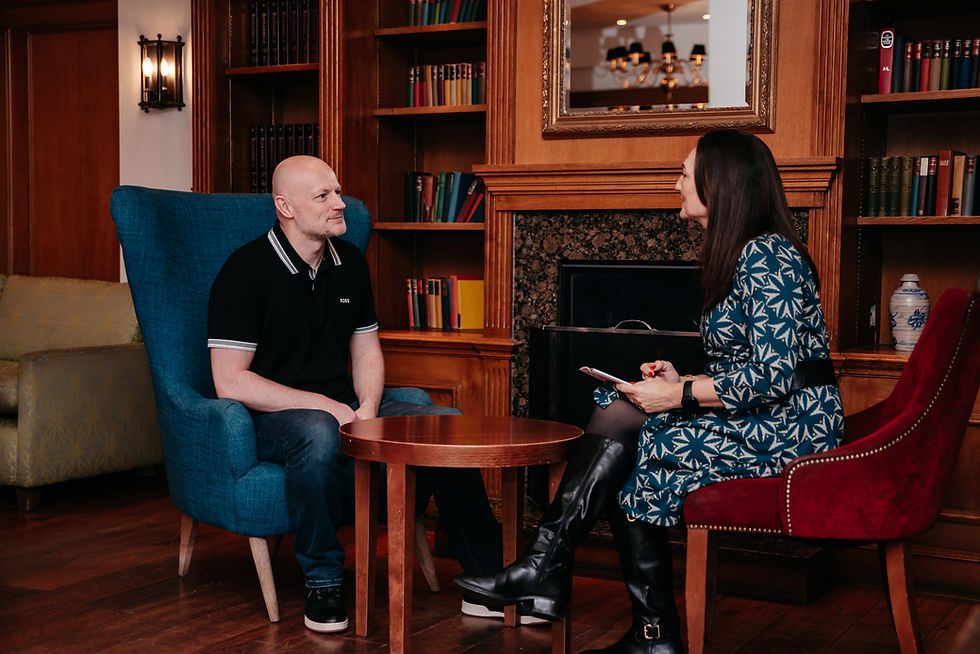
One of the persistent frustrations in public health is the knowing-doing gap, which is the space between understanding what would improve health and actually making it happen. That gap is not a failure of information, but rather a failure of support and accountability. This is where behaviour change techniques through health coaching prove value most clearly.
Health Coaches work with clients at the level of motivation, identity, and habit, not just instruction. They meet people where they are, rather than where clinical guidelines assume them to be. For the 24% of adults in Ireland who are not meeting recommended physical activity levels, already below the OECD average of 30%, the issue is rarely a lack of awareness that movement matters [5].
Health coaching in Ireland, at its best, addresses the structural and psychological barriers that information alone cannot shift. Coaches qualified to work in this space can make a meaningful difference across a range of settings, key examples include:
One-to-One Coaching: Tailored support for individuals managing existing conditions or seeking to reduce their risk
Group Programmes: Scalable, community-based delivery that builds shared accountability and peer support
Corporate Wellness: Supporting organisations to reduce presenteeism, sickness absence, and the lifestyle-related illness in Ireland driving those figures
Community Health Settings: Embedding healthy lifestyle support within GP surgeries, community centres, and social care environments
Training and Skills Needed for Effective Health Coaching
Effective health coaching is not simply a matter of enthusiasm for wellness. It requires a grounding in the science of behaviour change, a working knowledge of lifestyle medicine, and the communication skills to build the kind of trust that makes sustained change possible.
Health Coaches working in chronic disease prevention need to understand how habits form, why they resist change, and how motivational interviewing and evidence-based frameworks can be applied in real-world practice. Remember that behaviour change coaching draws on psychology, physiology, and coaching methodology in equal measure.
In practice, it requires a broad and integrated skillset that brings multiple disciplines together in real-world application:
Active listening and motivational interviewing techniques
Nutrition and lifestyle medicine fundamentals
Goal-setting and accountability frameworks
Understanding of common chronic conditions and their lifestyle drivers
Ability to work across diverse client populations and settings
Reflective practice and professional boundaries
Training that develops these competencies fully, through both theory and supervised practice, is what separates a qualified Health Coach from a well-meaning one.

How HCA Prepares Coaches to Support Clients Sustainably
Health Coaches Academy was built on the conviction that everyone deserves access to their own health coach, and that conviction shapes every aspect of how HCA trains the coaches who deliver that support. Our Level 5 Diploma in Health Coaching develops the knowledge, clinical awareness, and practical skills needed to work confidently with clients managing or seeking to prevent lifestyle-related illness in Ireland and beyond.
Critically for coaches looking to practise in Ireland, our diploma is fully accredited by both the UK & Ireland Health Coaches Association (UKIHCA) and the Association for Coaching, providing the professional standing and industry recognition that clients and employers expect.
Training is delivered by fully qualified, practising health coaches who teach from genuine experience, not theory alone. That combination of accredited rigour and practical depth means graduates are equipped to provide real healthy lifestyle support from day one of their practice.
Alongside the diploma, HCA's Group Coaching Certificate prepares coaches to scale their impact beyond the one-to-one setting, building programmes that reach more people with the same quality of support. With over 35 years of collective expertise and a learning model that blends online flexibility with in-person workshops, HCA produces coaches who are commercially ready and professionally grounded.
A Career That Meets Ireland's Health Needs Where They Are
The evidence is clear: lifestyle-related illness in Ireland is not a future problem. It is a present one, and the systems designed to manage it are already under significant pressure. Health coaching offers something that clinical appointments rarely can, and that’s sustained, personalised, behaviour-level support that addresses the root causes of chronic illness rather than its symptoms.
If you are considering a career in this field, join one of our upcoming free introductory Health Coach webinars to explore the full scope of what’s possible, from the different career pathways available in health coaching, to the earning potential in the industry, and the wide range of skills you’ll develop during your training.
You’ll also discover exactly what you’ll learn on our Level 5 Diploma training course, how Health Coaches work with clients in real-world settings, and how we support you step-by-step to build and launch your own successful health coaching practice.
References
[1] [2] [3] GOV.IE, “On the surface, the figures appear reassuring: 82% of adults reported being in good or very good health” and “39% reported a medically diagnosed long-term health condition, a figure that has remained stubbornly high despite a marginal decrease from 40% the previous year. Compare this to 2015, when around 28% reported a longstanding limiting health condition, and the direction of travel becomes harder to ignore” and “The most commonly reported conditions include high blood pressure at 8%, arthritis at 7%, and high cholesterol, asthma, and diabetes each at 5%, with mental health conditions reported by 3% of adults”: https://www.gov.ie/en/healthy-ireland/publications/healthy-ireland-survey-2025/
[4] Sleep Foundation, “...sleeping less than six hours per night significantly increases the risk of cardiovascular disease, type 2 diabetes, obesity, and depression, and elevates mortality risk”: https://www.sleepfoundation.org/sleep-faqs/is-6-hours-of-sleep-enough
[5] OECD, “For the 24% of adults in Ireland who are not meeting recommended physical activity levels, already below the OECD average of 30%, the issue is rarely a lack of awareness that movement matters”: https://www.oecd.org/en/publications/health-at-a-glance-2025_15a55280-en/ireland_af83e921-en.html

Comments